
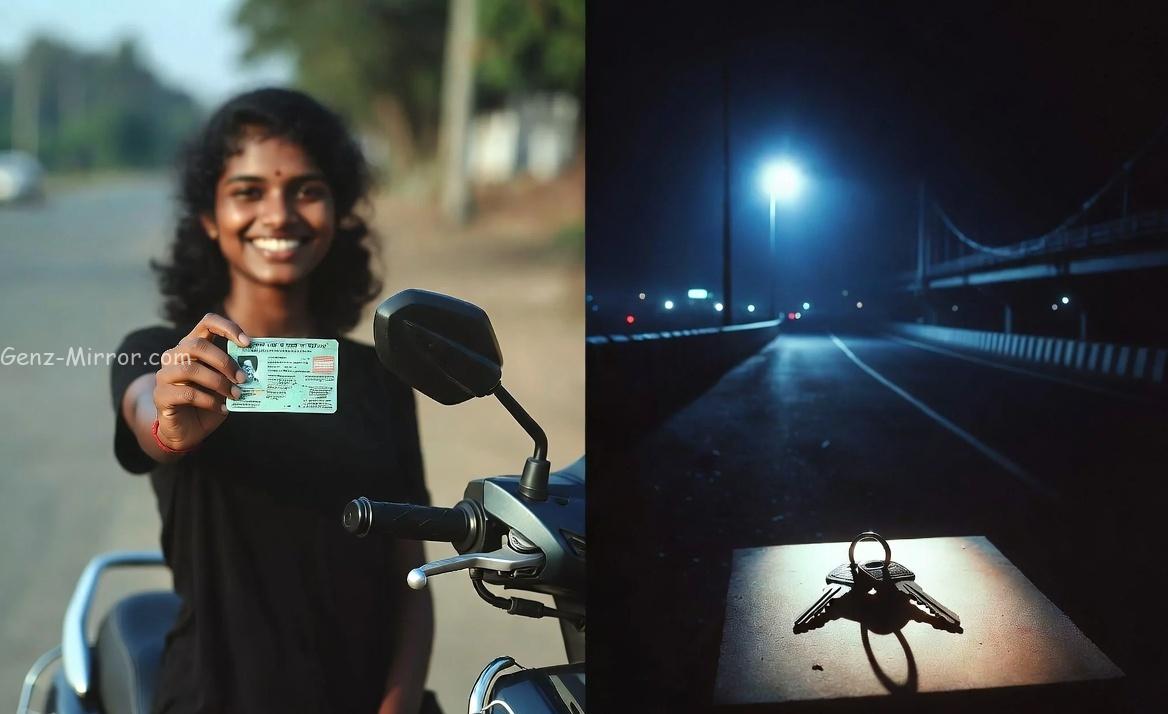
✍️ About Underage driving dangers …
This topic addresses the critical, global crisis of underage driving, sparked by the tragic passing of a 14-year-old student in Kerala, India. Around the world, millions of unauthorized minors access family motor vehicles with devastating consequences. This article explores the root causes of this deadly trend—ranging from parental indulgence to psychological thrill-seeking behaviors among teenagers. Furthermore, it outlines the strict legal ramifications under India’s amended Motor Vehicles Act and provides practical, actionable strategies for families to secure their vehicles. By bridging emotional awareness with legal realities, this post serves as an urgent wake-up call to protect young lives on global roadways.

Introduction: An Avoidable Tragedy
A devastating incident recently shook a peaceful neighborhood near kattakada, Thiruvananthapuram in Kerala, India. A 14-year-old ninth-grade student lost his life after losing control of his mother’s scooter. He panicked, slammed the brakes, suffered severe head trauma, and succumbed to his injuries. A bright future was wiped away in an instant.
Sadly, this is not an isolated incident. According to data from the World Health Organization, road traffic injuries stand as the leading cause of death globally for children and young adults aged 5–29 years.
Why do these incidents keep occurring despite widespread structural awareness? Why do parents continue to risk their children’s lives? This piece explores the complex psychology, harsh legal realities, and structural steps needed to eliminate unauthorized juvenile driving entirely.
Why Parents Turn a Blind Eye to the Danger
It is easy to blame teenagers for sneaking out, but the root cause often starts at home. Many parents treat giving their keys to a child as an act of love or a sign of maturity.
1. Misplaced Parental Pride and Social Status
In many developing societies, seeing a young boy or girl handling a motorcycle or car is viewed as a point of pride. Parents boast about how fast their children learn. This toxic social validation encourages dangerous behavior before the child’s brain has fully developed the capacity for risk assessment.
2. Convenience Over Safety
Often, parents hand over keys out of sheer convenience. Asking a 14-year-old to run a quick errand to the local grocery shop down the road seems harmless. However, an accident does not care about the length of your journey. A crash can happen 100 meters away from your front door just as easily as on a highway.
3. The Inability to Say “No”
Modern parenting struggles heavily with boundary setting. When a teenager throws a tantrum because their peers are driving, parents frequently surrender to the pressure. Permissive parenting in these situations can lead to tragic consequences.
The Dangerous Illusion of Adolescent Control
To an early adolescent, operating a motor vehicle feels like the ultimate form of freedom. However, neurobiological studies show that the prefrontal cortex—the part of the human brain responsible for impulse control and calculating risk—is not fully formed until age 25.
| Factor | Adult Licensed Drivers | Underage Minor Drivers |
| Risk Assessment | High defensive awareness | High illusion of invincibility |
| Emergency Braking | Controlled muscle memory | Panic slamming (leads to skidding) |
| Peer Pressure Resistance | High structural control | Extremely low (prone to showing off) |
When a minor encounters an unexpected hazard, such as a pedestrian stepping out or a sudden pothole, panic takes over. Lacking proper defensive training, they overcorrect, leading to fatal crashes.
The Severe Legal Consequences for Families
Many parents believe that if an accident occurs, their child will simply receive a warning due to their status as a minor. This is a massive legal misconception.
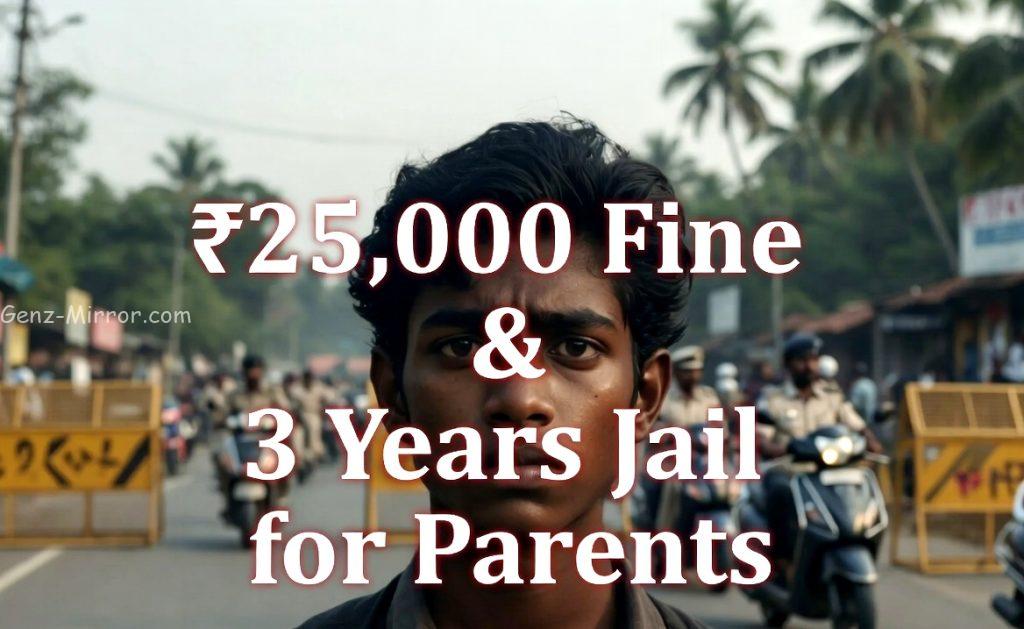
In India, the Government’s Revised Motor Vehicles Act enforces strict criminal accountability directly on the guardians. If a minor is caught driving, or causes an accident, the legal fallout is severe:
- Imprisonment for Guardians: The registered vehicle owner or parent faces up to 3 years of jail time.
- Massive Financial Penalties: A flat statutory fine of ₹25,000 is levied instantly.
- Vehicle Deregistration: The vehicle’s registration certificate (RC) is canceled for a full 12 months.
- A Ruined Future for the Minor: The child is legally banned from applying for a learners or permanent driving license until they reach 25 years of age.
- Complete Insurance Rejection: Because allowing an unlicensed minor to drive violates the fundamental terms of service, insurance companies will deny all third-party and own-damage claims. The family must pay all court-ordered victim compensations out of pocket.
20x Targeted HashTags: #RoadSafety #UnderageDriving #GenZMirror #SaveYoungLives #ParentingTips #DriveSafe #TrafficLaws #MotorVehiclesAct #KeralaRoads #JuvenileJustice #TeenDriving #PreventAccidents #ResponsibleParenting #GlobalRoadSafety #YouthAwareness #RecklessDriving #Ernakulam #Aluva #IndiaRoadSafety #SpeedKills #Underagedrivingdangers
How to Prevent Minors from Taking Vehicles Secretly
What happens when the child sneaks the keys out while the parents are sleeping or at work? Preventing unauthorized access requires combining emotional communication with smart mechanical safeguards.
1. Shift from Aggression to Empathy
Beating or screaming at an adolescent who sneaks a vehicle out often backfires, pushing them to become sneakier. Sit down and have an open dialogue. Explain the legal and physical dangers clearly. Show them real-world news reports. Let them understand that your restrictions stem from a desire to protect them, not control them.
2. Safeguard Your Keys Professionally
Treat your vehicle keys like a loaded firearm or valuable jewelry. Never leave them on coffee tables, key hooks near the door, or visible kitchen counters. Use a lockbox or keep them securely with you at all times.
3. Leverage Modern Vehicle Tracking Technology
If you worry your teen might access your vehicle, install an aftermarket GPS tracker with an ignition-alert feature. These systems send an instant notification to your smartphone the exact second your vehicle engine starts, allowing you to stop an unauthorized ride before it begins.
4. Direct Their Energy to Safer Alternatives
The desire for speed and mechanics is natural for teenagers. Redirect that energy safely. Enroll them in cycling clubs, competitive sports, or swimming. Give them a clear milestone to look forward to: “The day you turn 18, we will personally send you to an certified driving school and help you get your legal license.”

Minor driving accidents , Motor Vehicles Act 2019 penalties , Parental responsibility road safety , Teen road traffic injuries , Stopping juvenile driving .
Conclusion: It Takes an Entire Community
Road safety is a shared cultural responsibility. If you see a neighbor’s underage child riding a scooter or driving a car, do not look away. Speak to their parents immediately. Your single intervention could save that child’s life and protect another family from enduring a lifetime of grief.
Let us honor the memory of the young lives lost to these preventable incidents by vowing to keep our keys out of reach until our children are legally, mentally, and physically ready to drive.