Popular
-
 Real Madrid 23/24 Home
Original price was: Rs.999.00.Rs.333.00Current price is: Rs.333.00.
Real Madrid 23/24 Home
Original price was: Rs.999.00.Rs.333.00Current price is: Rs.333.00.
-
Portugal 2022 Jersey
Original price was: Rs.333.00.Rs.144.00Current price is: Rs.144.00.
-
Arsenal FC Home Jersey
Original price was: Rs.999.00.Rs.333.00Current price is: Rs.333.00.
-
Sega Star Boot
Original price was: Rs.999.00.Rs.333.00Current price is: Rs.333.00.
-
Argentina Messi Jersey
Original price was: Rs.333.00.Rs.144.00Current price is: Rs.144.00.







Breaking Space Barriers: How an 18-Year-Old Indian Teen Built KalamSAT, the World’s Smallest Satellite
📖 Meet Rifath Sharook, the teen genius who built KalamSAT …
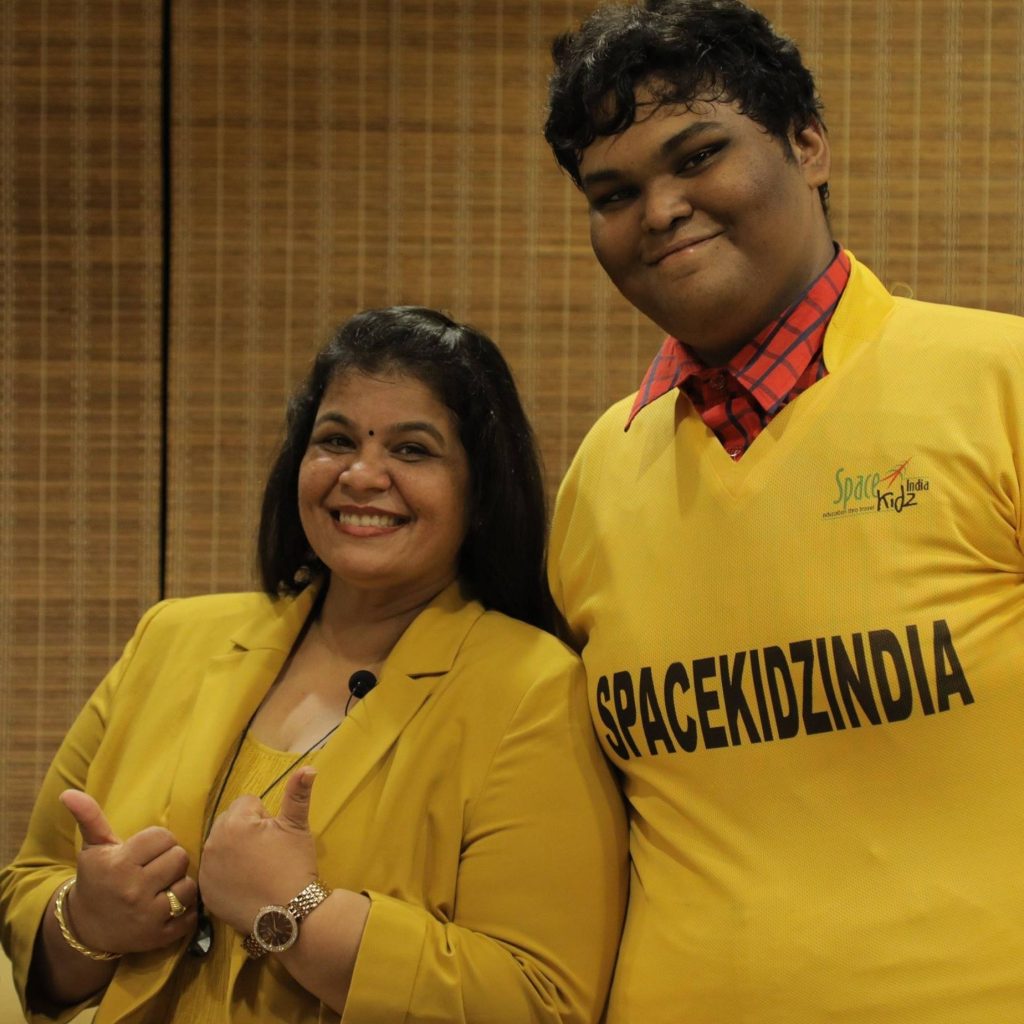
This post celebrates the extraordinary intersection of youth, passion, and aerospace brilliance by detailing the journey of Rifath Sharook and his team ( KalamSAT Rifath Sharook ) . At just 18 years old, Sharook shattered international space records by designing KalamSAT, a 64-gram structural marvel recognized as the world’s lightest and smallest satellite. Launched into sub-orbit by NASA, this invention proved that groundbreaking scientific disruption no longer requires multi-million-dollar corporate labs, but purely vision and dedication. It serves as a global testament to human potential, inspiring students worldwide to transcend age barriers, embrace STEM fields, and realize that even the smallest ideas can leave an indelible mark on the universe.
Introduction: The Day a 64-Gram Cube Captured the Cosmos
When we think of satellites, our minds naturally project images of massive, metallic structures weighing several tons, backed by billions of dollars and launched by heavily funded national space agencies. We think of sprawling control rooms filled with veteran scientists who have spent decades analyzing astronomical data. However, on June 22, 2017, the global scientific community stood still as NASA launched a sounding rocket from the Wallops Flight Facility in Virginia. What made this specific launch historic was not its payload size, but its profound minimalism. Tucked securely inside the rocket was a tiny, 4-centimeter cube that weighed a mere 64 grams—roughly the weight of a standard tennis ball or a large chicken egg.

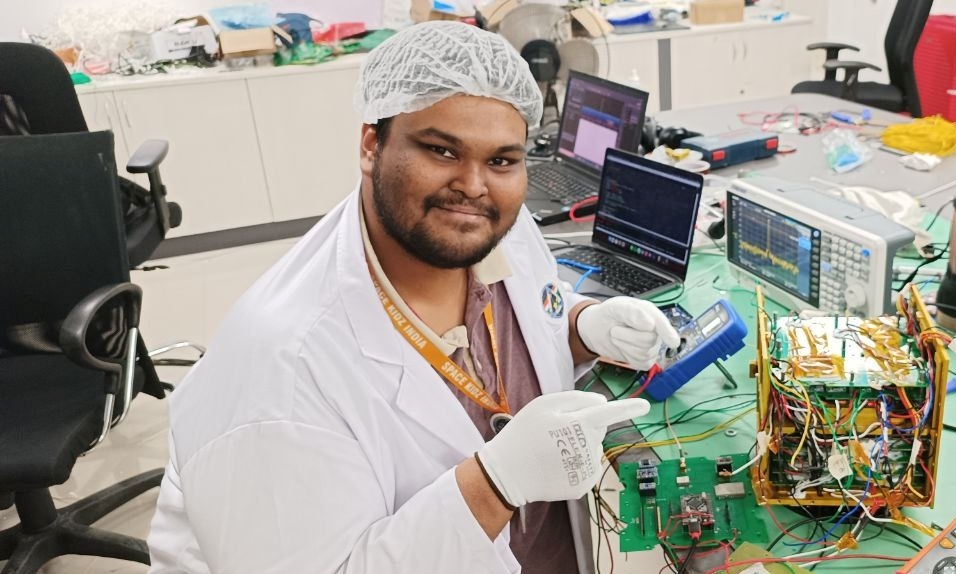
This miniature masterpiece was named KalamSAT, created in honor of India’s legendary nuclear scientist and former President, Dr. A.P.J. Abdul Kalam. Even more astonishing was the mind behind it: Rifath Sharook, an 18-year-old student from the small town of Pallapatti in Tamil Nadu, India. Leading a brilliant team of teenage innovators under the guidance of Space Kidz India, Sharook proved to the entire world that age is completely irrelevant when it comes to revolutionary scientific genius. For international audiences watching the evolution of modern aerospace technology, the story of KalamSAT is not just a localized success story; it is a definitive, universal case study on how open-source passion, youthful curiosity, and accessible modern materials can disrupt the global space industry.
The Genesis of an Idea: From Pallapatti to the Gates of NASA
Great innovations rarely happen in a vacuum; they are born from deep-rooted curiosity and the relentless drive to solve complex puzzles. For Rifath Sharook, the fascination with the night sky was a profound inheritance. His late father, a passionate local astronomer, had introduced him to the wonders of telescopes and celestial mechanics at a very tender age. When his father passed away, Sharook did not abandon their shared dream; instead, he immersed himself even deeper into the world of programming, physics, and electronics.
The breakthrough opportunity came when he discovered the “Cubes in Space” challenge—a prestigious global competition organized jointly by Idoodle Learning and supported by NASA. The challenge dared students worldwide to design an experiment that could fit inside a small, structural cube to be launched into space. While over 80,000 students from across the globe submitted complex, heavy designs, Sharook and his team at Space Kidz India took a completely opposite, radical approach. They asked themselves a foundational question: How small and light can a fully functional satellite actually be? By focusing heavily on extreme weight reduction without compromising electronic integrity, their design beat out tens of thousands of global competitors, earning a coveted spot on a NASA sub-orbital flight.
Breaking Down the Engineering: Why KalamSAT is a Technological Marvel
To appreciate KalamSAT from a global engineering perspective, one must understand the immense structural obstacles of space travel. When a rocket accelerates out of Earth’s atmosphere, the payloads inside are subjected to intense gravitational forces (G-forces), extreme vibrational stress, and unpredictable thermal shifts. Historically, heavy metals like titanium and specialized aluminum alloys were used to shield delicate internal electronics. However, adding weight increases the cost of a space launch exponentially.
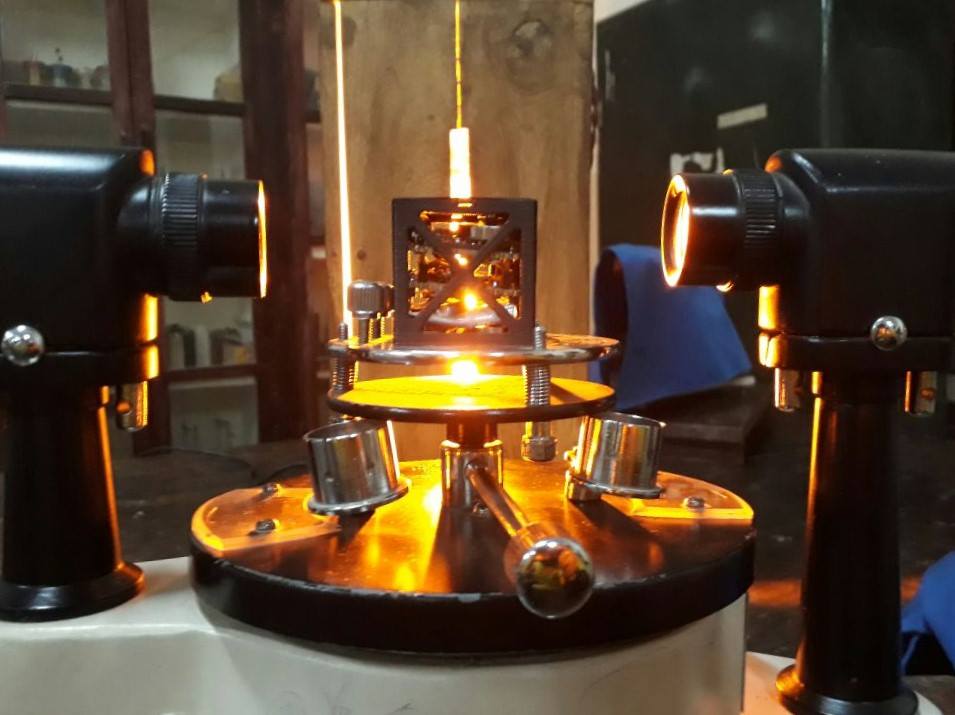
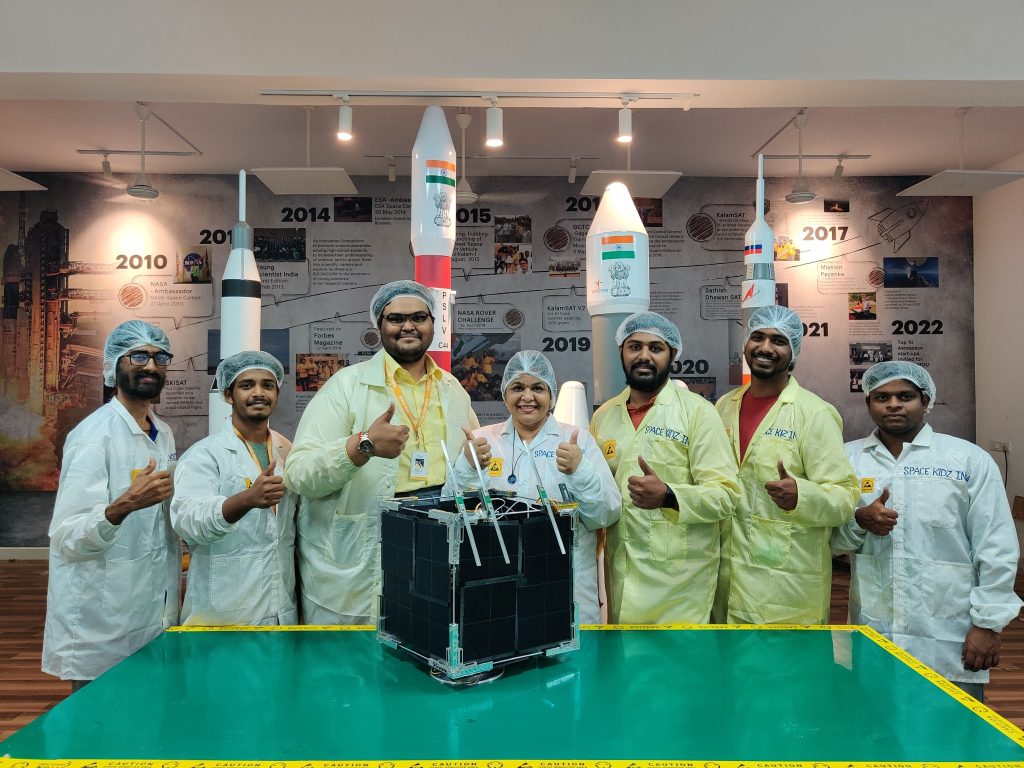
Sharook’s primary breakthrough lay in materials science. He bypassed traditional metals entirely, choosing instead to construct the outer matrix of the satellite using 3D-printed reinforced carbon fiber polymer. This marked the first time in global aerospace history that 3D-printed carbon fiber was tested in a space environment. Carbon fiber has an extraordinary strength-to-weight ratio, allowing KalamSAT to remain incredibly light while remaining structural sound enough to survive atmospheric exit.
Inside this 4-centimeter housing, Sharook seamlessly integrated a complex array of microprocessors, custom internal power sources, and eight highly sensitive digital sensors. The primary objective of these instruments was to measure the acceleration, structural rotation, and ambient radiation levels of the Earth’s magnetosphere during its sub-orbital journey. To learn more about how miniaturized satellites are currently shifting the paradigms of modern aerospace dynamics, you can read the latest updates on global satellite design paradigms via the NASA Space Science Portal.
The Historic Flight and Global Impact
On launch day, KalamSAT performed a precise 12-minute sub-orbital flight, operating flawlessly in the microgravity environment before safely splashing down into the Atlantic Ocean. When the data logs were successfully retrieved, they confirmed a monumental truth: the 3D-printed carbon fiber housing had shielded the internal components perfectly against the harsh vacuum of space.
This successful experiment had massive implications for the global satellite industry. It demonstrated that we are moving rapidly away from the era of monolithic, multi-ton satellites that take a decade to build. Instead, the future belongs to “Femto-satellites” and “Nano-satellites”—swarms of tiny, affordable devices that can be deployed simultaneously to monitor climate change, map global agricultural health, and provide internet access to the most isolated, impoverished corners of our planet. For a broader overview of how student-led STEM initiatives are gaining massive traction across developing nations, you can explore the extensive project archives curated by the Space Kidz India Innovation Hub.
20x Hashtags: #KalamSAT #RifathSharook #SpaceKidzIndia #NASA #SpaceInnovation #YoungScientists #ProudIndia #TechBreakthrough #STEMEducation #3DPrintingInSpace #SatelliteTechnology #InspiringYouth #GlobalAchievers #ScienceAndTech #AerospaceEngineering #GenZInnovators #APJAbdulKalam #MadeInIndia #SpaceExploration #TwinFlameCelebrities #sciastra #KalamSATRifathSharook
Our Thoughts: The Democratization of the Universe
At Twin Flame Celebrities, we believe that true celebrity status belongs to those who expand the horizons of human capability. Rifath Sharook’s journey is a beautiful blueprint for the democratization of science. In the past, exploring outer space was an elite privilege reserved exclusively for superpowers and hyper-wealthy corporations. Today, an 18-year-old student sitting in a modest room in India can code, print, and launch an asset into space. Sharook chose to pursue a pure B.Sc. in Physics rather than standard corporate engineering tracks, proving his dedication to core scientific exploration.
This story sends an echoing, powerful message to every young person across the globe: Never let your geographic location, your financial status, or your age dictate the scale of your ambitions. The cosmos does not look at your credentials; it responds to your innovation. As KalamSAT circles in our memory as a symbol of pure human potential, it challenges educators, parents, and societies worldwide to foster creative spaces where children are allowed to experiment, fail, and ultimately touch the stars.

About Me



Product Showcase